

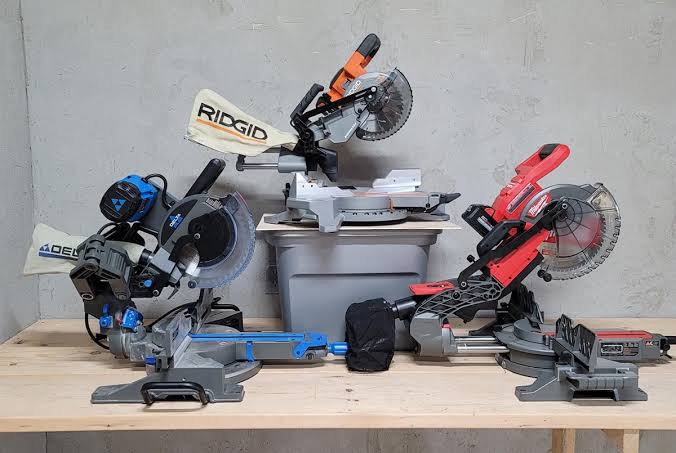

Few tools carry as much influence over the quality of finished woodwork as the saw used to make the first cuts. Clean, accurate angles define how joints fit, how trim lines up, and how professionally a completed project reads to the eye. For woodworkers at every level, mitre saws provide the angular precision and repeatability that elevate work from acceptable to exceptional. Understanding the full range of options—and knowing which features actually matter—puts the right tool in the right hands from the start.
What a Mitre Saw Does That Other Tools Cannot
A mitre saw’s value lies in what it does reliably, not just what it does technically. Any saw can make an angled cut under the right conditions. A mitre saw makes the same angled cut accurately, repeatedly, and with minimal setup time between repetitions. That consistency is the defining advantage.
The saw mounts a circular blade on a pivoting arm above a fixed table. The workpiece rests against a vertical fence, and the arm descends to complete the cut. Angle adjustments move the arm laterally for mitre cuts or tilt the blade for bevel cuts. The combination of a stable base, secure fence, and controlled blade path produces results that handheld tools cannot replicate reliably.
Matching the Saw Type to the Work at Hand
Three principal configurations cover the range of woodworking applications most craftspeople encounter. Each has a distinct profile of strengths that aligns with specific types of projects.
Standard mitre saws handle crosscuts and basic angled cuts with efficiency and simplicity. The blade pivots left and right but does not tilt, which limits the cut types available but keeps the machine straightforward to operate and maintain. For straightforward home projects and basic carpentry, this type performs reliably without unnecessary complexity.
Compound mitre saws introduce bevel capability, allowing the blade to tilt in one or both directions in addition to pivoting laterally. Single-bevel models tilt in one direction; dual-bevel models tilt both ways. The dual-bevel configuration is particularly valuable for crown molding installation, where opposing compound angles appear frequently and the ability to cut without flipping the workpiece saves significant time.
Sliding compound mitre saws combine the bevel capability of compound models with an extended cutting capacity enabled by a rail system. The blade travels along rails during the cut, allowing it to cross wider boards than a fixed-pivot saw could manage. This format suits furniture makers and anyone who regularly works with wide stock.
Blade Specifications and Their Practical Consequences
Blade diameter determines how deep and how wide a saw can cut. Larger blades reach deeper into thicker material and can cross wider boards in a single pass, but they add mass and require more powerful motors to spin effectively.
Tooth count influences the character of the cut surface. Higher tooth counts produce smoother surfaces with less tear-out, which matters for visible joinery and finish trim. Lower tooth counts remove material faster, making them more suitable for rough cuts where surface finish is secondary to speed. A general-purpose blade handles most workshop tasks adequately, while task-specific blades improve results for specialized work.
Blade material affects durability and edge retention. Carbide-tipped blades outlast steel alternatives substantially and handle dense hardwoods without the rapid dulling that makes frequent blade changes necessary. The added cost of carbide blades is offset by their longer service life and the consistency of cut quality they maintain over time.
Fence Systems and Their Effect on Accuracy
The fence is the surface against which every workpiece rests during cutting, and its accuracy directly determines the accuracy of every cut made against it. A fence that holds precisely perpendicular to the table surface produces square cuts; a fence that allows any deflection introduces error into every pass.
Quality fence systems are tall enough to support the full height of the material being cut, adjustable enough to accommodate non-standard configurations, and rigid enough to resist movement under cutting pressure. Some saws feature sliding or folding fence extensions that extend support for longer boards without requiring a separate stand or support system.
Inspecting the fence before purchase—checking for straightness, secure locking, and freedom from wobble—reveals a great deal about the overall build quality of the saw.
Speed Settings and Material Compatibility
Variable-speed motors allow the cutting speed to be adjusted based on the material being cut. Harder materials and certain composites benefit from slower blade speeds that reduce heat buildup and material stress. Softer woods and many standard lumber species cut cleanly at higher speeds.
Fixed-speed saws work adequately for most common woodworking materials, but the flexibility of variable speed becomes valuable when the range of materials being cut extends beyond standard lumber. Aluminum, some plastics, and engineered wood products each respond differently to blade speed, and the ability to adjust prevents premature blade wear and cut quality problems.
Table Surface Quality and Support Extensions
The table surface where the workpiece rests during cutting should be flat, smooth, and free from imperfections that might affect how material seats against it. Slight warps or raised areas in the table surface introduce inconsistency into cuts made along the length of the material.
Many saws offer extension wings or outfeed supports that extend the effective table surface for longer boards. Without this support, long pieces can tip or shift as they reach past the edge of the table, compromising the cut. Purpose-built stands with integrated material supports address this issue for saws that will see regular use with long stock.
Practical Maintenance That Protects Your Investment
A mitre saw maintained consistently performs accurately for years. Regular blade cleaning removes the pitch and resin buildup that accumulates during cutting and causes the blade to drag. Checking and adjusting the fence alignment periodically ensures that cuts remain square over time. Lubricating pivot points and sliding rails—where applicable—keeps adjustments smooth and prevents the wear that comes from metal-on-metal contact without lubrication.
Blade replacement is a maintenance task that should be driven by cut quality rather than a fixed schedule. When cuts become rough, require more downtime force, or burn the wood surface, these are signals that the blade needs attention. A sharp blade is one of the simplest and most effective ways to maintain saw performance.
Selecting With Confidence
Every feature on a mitre saw serves a purpose, and understanding those purposes allows buyers to separate genuinely useful specifications from marketing noise. Focus on the types of cuts your work requires, the materials you cut most often, the space available in your workshop, and the frequency of use the saw will see.
A saw chosen on those terms rather than on price alone becomes a tool you reach for confidently, project after project, knowing it will perform exactly as expected every time.
